
 By
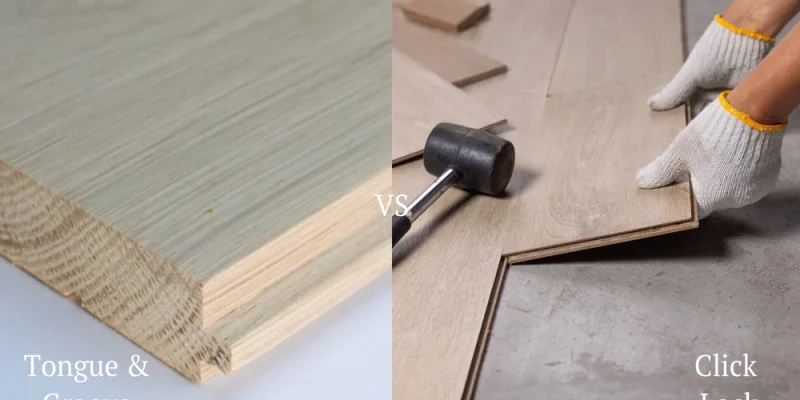
When selecting wooden floors, there are many aspects that need considering apart from the right wood colour or texture. One of those aspects relates to the installation system that affects the speed at which the floor can be installed, the linking of the boards, and what maintenance may be required later on. Among various options, people may consider click-lock and tongue-and-groove flooring systems, which differ from each other in many aspects and advantages depending on a specific product as well as the subfloor and installation method.
Knowing the specifications of each kind will allow designers and homeowners to make the right choice when finding an appropriate solution matching the requirements of the room where the flooring is to be installed, the installation process, and subsequent use.
Understanding Click-Lock and Tongue-and-Groove Flooring
The difference between the two types of flooring in the comparison click lock vs tongue and groove flooring is plain from the way the boards are connected. For instance, click-lock flooring represents special edges that lock together, thus connecting the boards in a proper way. Some of them are designed for floating installation, meaning the floor is placed on the underlayment without being attached to the base.
Unlike click-lock flooring, the tongue-and-groove style of flooring has a tongue protruding at the edge of one board, while the other board has an appropriate groove. Such designs allow putting the boards together correctly. In some cases, the boards may need to be glued together or fastened with the help of some other method.
Installation Speed and Ease of Fitting
When time is a top factor in installing a floor, people tend to choose click-lock flooring. The design of this type of flooring allows the boards to lock into one another without using adhesives at each corner.
With quick-install wooden flooring, however, the proper subfloor must always be prepared. The subfloor must comply with all necessary requirements concerning flatness, cleanliness, and moisture content. In addition, all specifications for expansion gaps and underlay must be taken into account.
With tongue-and-groove flooring, on the other hand, more preparation is required. More tools and more time for the installation process will be necessary if adhesive or mechanical fixing is involved.
Stability and Performance in Daily Use
In reality, both methods can give a stable floor if they are properly installed. Click-lock joints will hold together planks on the floor, but the real performance will depend on the locking profile, construction of the planks, subfloor, and environment. An uneven subfloor or incorrect installation may cause movement or separation of the joints.
Either the floating floor system or the traditional tongue-and-groove system should be installed considering the right allowances and moisture management strategies, as both wood and wood-based products react differently to temperature and humidity fluctuations.
Floating Wood Floor Installation in India
When planning wooden floor installation in India projects, it is recommended to consider climatic conditions such as humidity levels, the state of the subfloor, and moisture exposure. All rooms and flooring products may not be suitable for floating floors. The installation guidelines provided by manufacturers will help determine whether a moisture barrier, underlay, or specific subfloor preparation is required.
Before installing the flooring, make sure to acclimatise it as per the manufacturer’s recommendations. Always verify the expansion gap allowance while checking the subfloor.
Comparing Maintenance and Long-Term Care
Both systems require timely care and maintenance. Regular sweeping or vacuuming is necessary, and spills on the surface should be cleaned immediately while keeping the amount of water under control, especially when the flooring is made of natural wood.
Regarding renovations or repairs with click-lock flooring, certain installations allow for replacing only damaged planks, but disassembly of the floor may be required. In the case of tongue-and-groove flooring, which board can be repaired depends on the fastening method, the type of boards used,d and the flooring specifications.
When making an interlock wood planks comparison, consider installation requirements, possible repairs, subfloor compatibility, and expected usage.
Conclusion
Click-lock flooring is a practical solution when you need a floating floor that allows for quick installation. The tongue-and-groove system provides a traditional joining method, but its performance depends on the preparation and installation method used. Comparing both systems based on the flooring product, room conditions,s and maintenance requirements can help homeowners choose a suitable option for their space.




Comments